
Client: Regional Transportation District (RTD)
Location: Denver Metro Area, Colorado
View the Bus Rapid Transit (BRT) Feasibility Study on the RTD website.
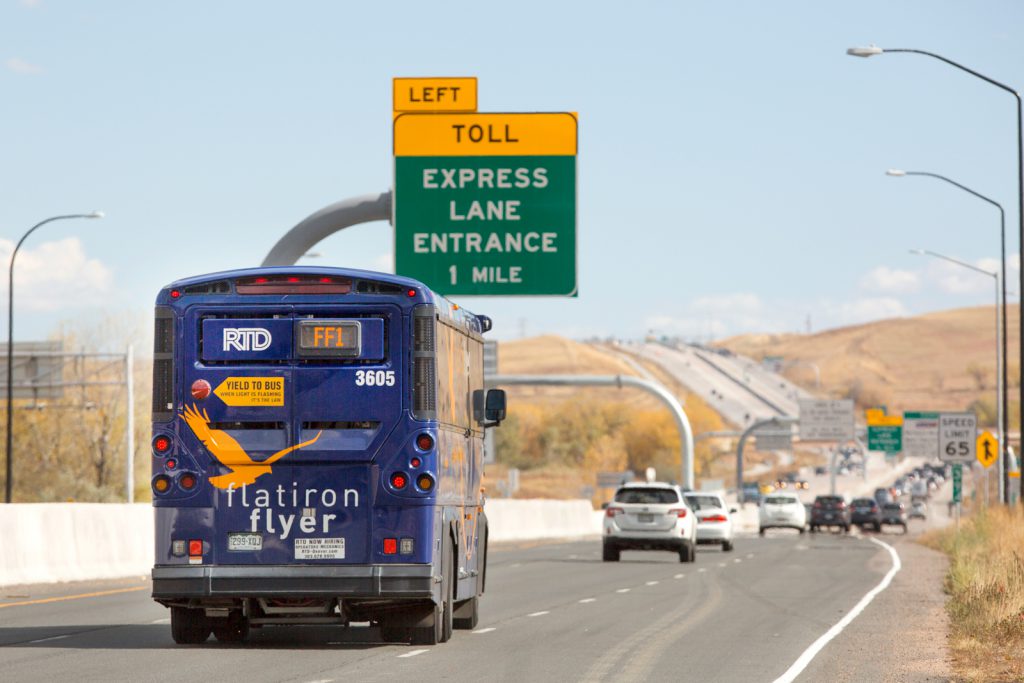
FHU led the development of RTD’s Bus Rapid Transit (BRT) Feasibility Study which was a 24-month process that evaluated the entire 2,400 square miles of RTD’s service area to identify a region-wide network of feasible BRT corridors. FHU developed a data-driven, four-tier decision-making process to support identification of high-priority corridors for FTA Small Starts funding. The plan process developed and evaluated 30 potential BRT routes throughout the Denver metropolitan area. The process included an evaluation of existing and future land use patterns and the identification of key travelsheds. The project team examined corridors using key evaluation principles such as social equity, existing and future ridership potential, right-of-way availability, congestion, and travel time savings.
The team conducted a focused equity analysis during the study to ensure the envisioned BRT network reaches communities in the district most in need of high-quality transit service — neighborhoods with high proportions of households with low incomes, people with disabilities, and older adults, for example. To help with the equity analysis, the team developed a webtool that allows users to see detailed demographic information for every census tract in the district and apply filters (e.g., minimum of X low-income households) to show how well the proposed BRT routes serve census tracts with high equity populations. In addition to guiding the planning process, this was a useful tool for stakeholder discussions.
FHU developed and led engagement with the study’s Technical Advisory Committee (TAC) and supported outreach with the RTD Board of Directors and key regional stakeholders. Throughout the process, FHU worked with local community leaders, RTD staff, and the RTD Board. Consensus gained during the public and stakeholder engagement process enabled the recommendations to be included in the Denver Regional Council of Governments (DRCOG) 2050 Metro Vision Regional Transportation Plan.
Services Rendered:
We use cookies to improve your experience on our site. By using our site, you consent to cookies.
Manage your cookie preferences below:
Essential cookies enable basic functions and are necessary for the proper function of the website.
Google Tag Manager simplifies the management of marketing tags on your website without code changes.
You can find more information in our Cookie Policy and .